
Choosing senior living
Touring a Senior Community: A Checklist
A polished tour can hide as much as it shows. Here is what to look for, the affirming signals that matter, the questions to ask, and the red flags to trust.
Editorially reviewed· Last reviewed July 28, 2026
Key takeaways
- Visit more than once, including an unscheduled visit at a busy time like a mealtime, to see past the polished sales tour.
- Watch how staff and residents actually interact, since warmth and respect show up in small moments, not brochures.
- Look for concrete affirming signals such as nondiscrimination policies, staff training and visible welcome for partners and chosen family.
- Ask direct questions about cost, what triggers extra fees, staffing, and what happens if care needs grow.
- Trust real red flags like rushed tours, evasive answers, unhappy residents or strong odors, even when the building looks impressive.
On this page
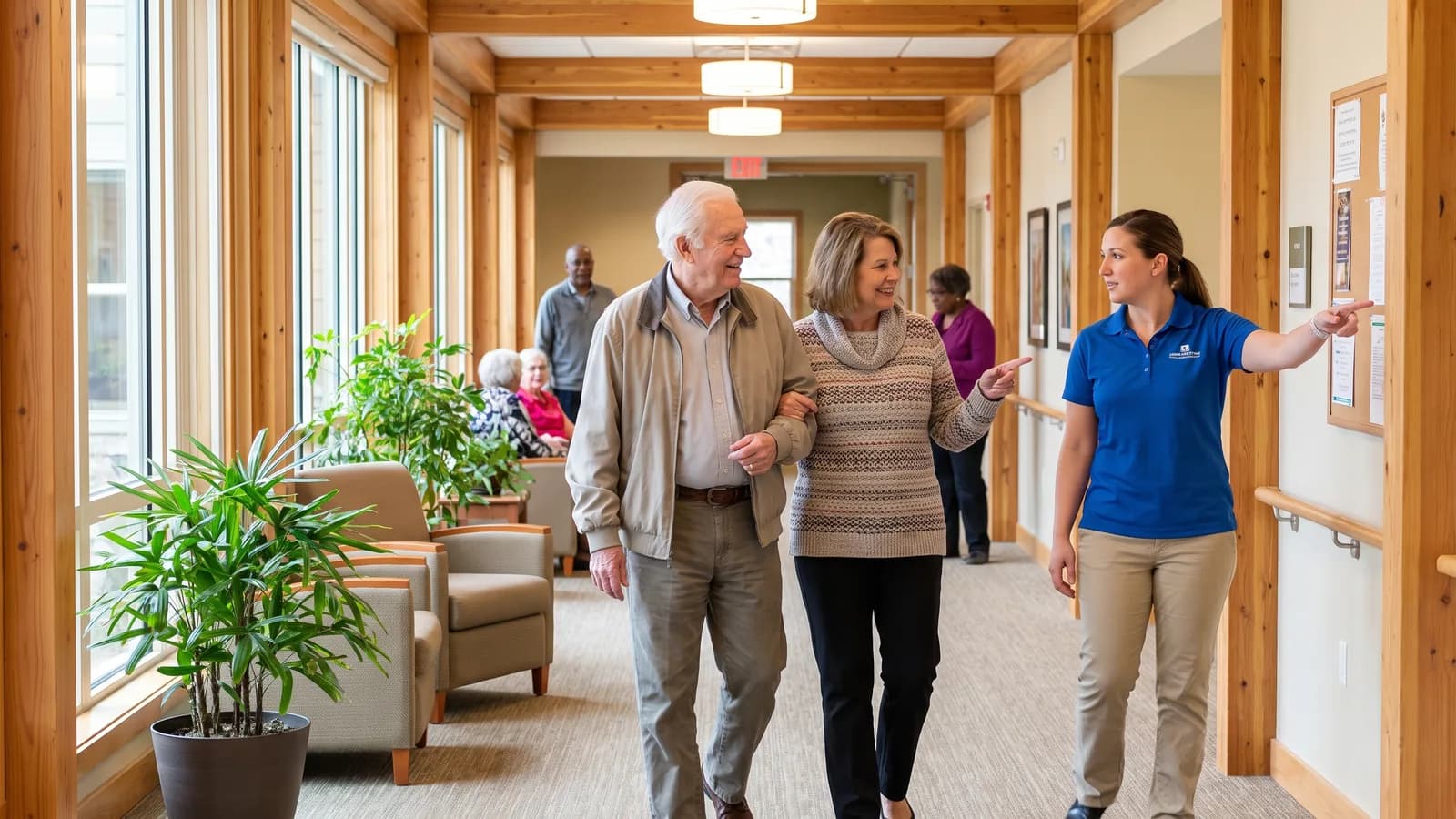
A tour of a senior community is a sales presentation, and there is nothing wrong with that as long as you know it. The fresh flowers in the lobby, the smell of cookies, the cheerful staff on tour duty: these are real, but they are also chosen for you to see. Your job as a visitor is to look past the presentation and understand what daily life is actually like for the people who live there.
That takes a little strategy and a willingness to ask direct questions. This guide gives you a practical checklist for touring, covering what to look for, the affirming signals that matter to LGBTQIA+ elders and their families, the questions worth asking, and the red flags to trust even when a building is beautiful. Use it alongside your own instincts, because what you feel on a visit is data too.
When and how should I visit?
Visit more than once, and make at least one of those visits unscheduled. A single planned tour shows you the community at its most polished. An unannounced drop-in at a busy time, especially a mealtime, shows you how things run on an ordinary day. Mealtimes are revealing because they put staffing, food quality, dignity and the social life of the community all on display at once.
Notice how the place feels when no one is performing for you. Are residents up and engaged, or parked in front of a television alone? Do staff greet people by name and speak with them respectfully, or talk over them? The National Institute on Aging suggests visiting more than once and at different times of day before choosing. Bring someone you trust for a second set of eyes, and jot notes right after each visit while impressions are fresh. Our guide on questions to ask before moving in pairs well with this one.
What should I look at, room by room?
Move through the community with a checklist in mind rather than just following the guide. Small, concrete details tell you more than a sweeping impression of the lobby. Use the table below as a starting point.
| Area | What to look for | Warning sign |
|---|---|---|
| Common areas | Clean, comfortable, residents actually using them | Empty, echoing, or residents left alone and idle |
| Dining | Appealing food, unhurried meals, choices offered | Rushed meals, poor food, no help for those who need it |
| Resident rooms | Clean, personalized, safe bathrooms, call buttons | Bare, cluttered, unsafe layouts, odors |
| Staff interactions | Warm, patient, using names, making eye contact | Talking over residents, ignoring calls for help, curt tone |
| Safety | Handrails, good lighting, secure exits where needed | Trip hazards, dim halls, unanswered alarms |
Trust your nose and your gut here. A persistent strong odor can point to understaffing or neglected care, and residents who seem sad, ignored or fearful matter more than any amenity. Our guides to senior living contract red flags and signs of abuse and neglect go deeper on the warning signs worth taking seriously.
What affirming signals should LGBTQIA+ elders look for?
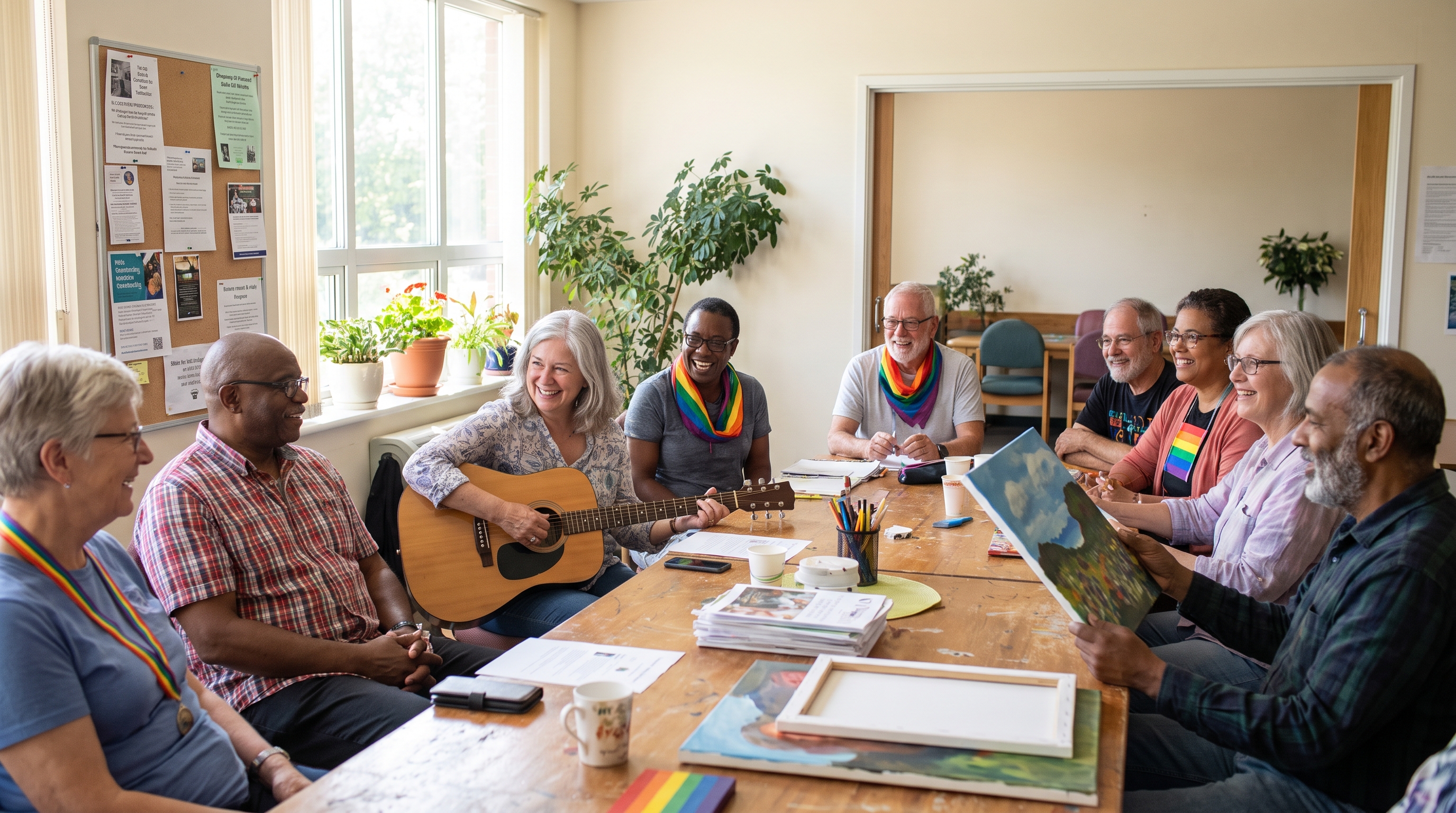
For LGBTQIA+ elders, a good tour is not only about safety and cleanliness. It is also about whether you will be able to live openly and be respected. Look for concrete signals rather than vague friendliness. Ask whether there is a written nondiscrimination policy and ask to see it. Ask whether staff have received any training on caring for LGBTQIA+ residents, and notice whether they can describe that training specifically or only offer a warm smile.
Pay attention to how staff respond when you ask direct questions about how LGBTQIA+ residents and their partners and chosen family are treated. Comfort and specificity are good signs. Discomfort, deflection or a quick change of subject are worth noting. Visible cues can help too, though a rainbow sticker alone is not proof of anything. Our guides on what LGBTQIA+-affirming senior care means and how to choose LGBTQIA+-affirming senior living explain what genuine affirming care looks like beyond the surface. Keep in mind that some legal protections have shifted in recent years and should not be assumed as settled, so ask about the community's own current policies rather than relying on general assumptions.
Who else should I talk to besides the tour guide?
The person leading your tour is usually in sales, and their job is to present the community well. Some of the most honest information comes from everyone else. If you can, gently strike up a conversation with a resident or two away from the guide, and ask what they like and what they would change. Residents will often tell you the small truths a brochure never will, from whether call lights get answered quickly to whether the food is really as good as it looked.
It is also worth asking to meet someone from the direct-care staff, such as a nurse or an aide, rather than only the marketing team, and noticing whether the community makes that easy or steers you away. Families visiting their own relatives can be a candid source too. And if a resident or family member is openly LGBTQIA+, hearing how welcome they feel in daily life is worth more than any policy on paper.
What questions should I always ask?
Some questions belong on every tour, no matter how the building looks. Ask what the base monthly cost covers and, just as important, what triggers extra fees, since surprise charges are one of the most common complaints families report. Ask how staffing works during the day, overnight and on weekends, and what the staff-to-resident ratio is. Ask what happens if a resident's care needs grow, and whether they would eventually have to move. Ask how the community handles complaints and emergencies.
Then ask the questions that matter to you personally, including how the community welcomes LGBTQIA+ residents and their chosen family, and how a partner is treated in decisions and visits. Ask for the key answers in writing, since a promise on a tour is not the same as a commitment in a contract. If the money side feels overwhelming, our guide to paying for senior care can help, though none of this is individualized financial advice, so confirm specifics with the community and a qualified advisor. When you are ready to compare vetted, affirming options, our directory is a good place to start.
A tour is your best chance to see the truth before you sign anything, so use it fully. Visit more than once, look past the polish, ask the hard questions, and trust what you feel as much as what you are told. The right community will welcome your questions rather than dodge them, and you will leave a good visit feeling not sold to, but genuinely seen.
Sources
- How to Choose a Nursing Home or Other Long-Term Care, Medicare.gov
- Residential Facilities, Assisted Living, and Nursing Homes, National Institute on Aging (NIH), 2023
Frequently asked questions
How many times should I tour a community before deciding?
At least twice, and ideally once on a scheduled tour and once on an unannounced visit at a busy time such as a mealtime. A single polished tour is designed to impress. Seeing the community at different times and on a normal day tells you far more about daily life there.
What are the biggest red flags on a tour?
Watch for a rushed tour, evasive or vague answers about cost and staffing, residents who seem unhappy or ignored, strong odors, and staff who talk over residents or dismiss your questions. Any of these deserve attention even if the building itself looks beautiful.
What affirming signals should LGBTQIA+ elders look for?
Look for a written nondiscrimination policy that is actually shared with you, staff who can describe real training on inclusive care, visible welcome for partners and chosen family, and comfort answering direct questions about how LGBTQIA+ residents are treated. How staff respond to the questions often tells you as much as the answers.
What questions should I always ask?
Always ask what the base cost covers and what triggers extra fees, how staffing works day and night, what happens if care needs increase, how complaints are handled, and how the community welcomes LGBTQIA+ residents and their chosen family. Ask for key answers in writing.
Keep reading

Choosing senior living
Is It Time for Memory Care?
Deciding when a loved one needs memory care is one of the hardest calls a family makes. Here are the honest signs, how to weigh the decision, and how to tour affirming memory care.
Choosing senior living
The Questions to Ask Before You Move In
The questions that reveal whether a senior living community is genuinely affirming, not just polite on a tour. Bring this list, and write down who answers.
Choosing senior living
Skilled Nursing vs Assisted Living: How to Choose
Assisted living and skilled nursing sound similar but serve very different needs. Here is how they differ, what each costs, and how to tell which one actually fits.