
Choosing senior living
Is It Time for Memory Care?
Deciding when a loved one needs memory care is one of the hardest calls a family makes. Here are the honest signs, how to weigh the decision, and how to tour affirming memory care.
Editorially reviewed· Last reviewed July 28, 2026
Key takeaways
- Memory care is specialized residential care for people with dementia, with secured surroundings, trained staff, and structured routines.
- The clearest signals are safety problems: wandering, leaving the stove on, medication mistakes, and falls that home care can no longer prevent.
- Caregiver exhaustion counts too. Dementia caregiving is relentless, and burning out helps no one.
- Nearly 7 million Americans age 65 and older were living with Alzheimer's dementia as of 2024, so this is a common, shared crossroads, not a personal failing.
- Affirming memory care matters deeply, because a resident who cannot always self-advocate needs staff who will honor their identity and their chosen family.
On this page
Few decisions in caregiving weigh as heavily as this one. Watching someone you love change under dementia is painful enough; deciding that you can no longer keep them safe at home can feel like a betrayal, even when it is an act of love. If you are asking whether it is time for memory care, you are already doing the hard, responsible work of facing the question honestly.
You are also far from alone. As of 2024, nearly 7 million Americans age 65 and older were living with Alzheimer's dementia, according to the Alzheimer's Association. This is a shared human crossroads, not a private failure. This guide lays out the honest signs, how to make the decision with less guilt, and how to tour memory care that will truly honor an LGBTQIA+ elder. It is general information, not medical advice; your loved one's doctor should be part of this.
What is memory care?
Memory care is a specialized kind of residential care built for people living with Alzheimer's or another dementia. It differs from standard assisted living in ways that matter as the disease progresses.
Memory care communities typically offer secured surroundings that prevent unsafe wandering, staff trained specifically in dementia care, structured daily routines that reduce confusion and anxiety, and activities designed for cognitive needs. That specialization is why memory care usually costs more than assisted living. Our guide on understanding levels of senior care shows where it sits on the spectrum, and our overview of LGBTQIA+ memory care goes deeper on what affirming dementia care looks like.
What are the signs it may be time?
There is rarely one dramatic moment. More often a pattern builds until you realize home is no longer safe. Weigh the whole picture rather than any single incident, and lean on the Alzheimer's Association's list of warning signs as a reference.
The strongest signals cluster around safety:
| Area | Warning signs to watch for |
|---|---|
| Wandering | Getting lost in familiar places, leaving home and not finding the way back |
| Home hazards | Leaving the stove or water on, forgetting food cooking, unsafe with appliances |
| Medication | Missing doses, doubling up, or unable to manage a regimen safely |
| Falls and mobility | Frequent falls, or unsafe movement that home care cannot prevent |
| Behavior | Aggression, severe confusion, or agitation that is hard to manage safely |
| Self-care | No longer eating, bathing, or dressing adequately even with help |
When several of these are present, and when in-home help can no longer close the safety gap, the question has usually answered itself. The point of memory care is not to give up on someone; it is to surround them with the trained supervision that home cannot provide around the clock.
What about the caregiver?
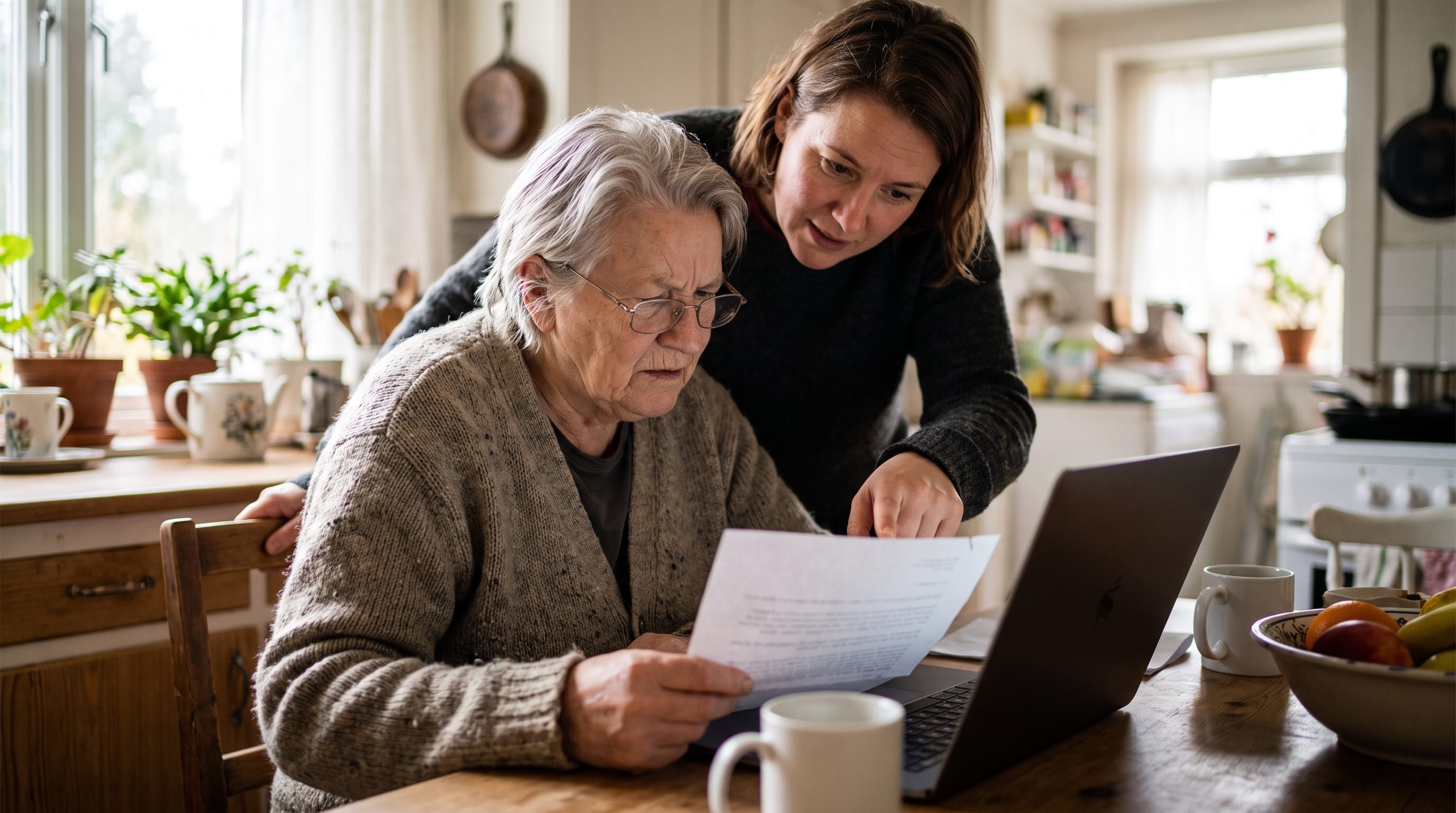
Here is a factor families are often reluctant to name: your own limits count. Dementia caregiving is one of the most demanding jobs there is, and it does not clock out. In 2023, family and other caregivers provided billions of hours of unpaid dementia care, the Alzheimer's Association reports, and the toll on their health and lives is well documented.
If you are not sleeping, if your own health is slipping, if you cannot leave the house, or if the care needs now exceed what one person can safely provide, that is not a reason to feel ashamed. It is real information about whether the current arrangement can continue. Burning out does not help the person you love; it usually leads to a crisis for both of you. Our guide on caring for a partner with dementia speaks directly to this strain. Choosing memory care can be the choice that protects two people at once.
How do I make the decision without guilt?
Guilt shows up for almost everyone, and it is a poor decision-maker. It tells you that a good person would find a way to manage at home forever, which is simply not true when a disease outpaces what home can offer.
Try to anchor the decision to two clear questions instead. First: is my loved one genuinely safe where they are? Second: can I sustain this level of care without seriously harming my own health? If the honest answers are no and no, memory care is not abandonment; it is the responsible next step. Bring their doctor into the conversation, and consider a geriatric care manager or dementia specialist to help you read the situation. Whenever possible, involve your loved one in the decision while they are still able to take part, and honor the wishes they expressed earlier.
How do I tour affirming memory care?
Once you have decided to look, the tour is where you learn what a community is really like. For an LGBTQIA+ elder this carries extra weight, because a resident with dementia cannot always speak up for themselves. The staff's respect for who your loved one is has to be reliable when your loved one can no longer insist on it.
As you tour, watch and ask:
- How do current residents look, engaged and clean and calm, or parked and ignored?
- What dementia-specific training does staff receive, and what is the staff-to-resident ratio, including overnight?
- Do staff receive LGBTQIA+-aging training such as SAGECare, and does the nondiscrimination policy name sexual orientation and gender identity?
- How will you honor my loved one's identity, life history, and chosen family, especially as they lose the ability to explain themselves?
- How are chosen family and partners treated as visitors and as decision-makers?
Document your loved one's identity, history, and wishes in advance so staff have it even when your loved one cannot supply it. Our touring a senior community checklist has more questions to bring, and you can search for affirming memory care in our directory.
There is no version of this decision that feels easy, and you should not expect it to. What you can do is make it carefully, with the person's safety and dignity at the center, and with your own limits honestly acknowledged. Choosing memory care, in the right place with the right people, is not the end of your caregiving. It is a new chapter of it, one where you can go back to being fully present as a partner, a child, or a chosen-family member, while trained hands carry the load you were never meant to carry alone.
Sources
- 2024 Alzheimer's Disease Facts and Figures, Alzheimer's Association, 2024
- 10 Early Signs and Symptoms of Alzheimer's and Dementia, Alzheimer's Association
- SAGECare cultural competency training, SAGE (Services and Advocacy for GLBT Elders)
This guide is general information, not medical advice. Talk with a qualified clinician about your situation.
Frequently asked questions
What is memory care?
Memory care is a specialized type of residential care for people living with Alzheimer's or another dementia. It offers secured surroundings to prevent unsafe wandering, staff trained in dementia care, structured daily routines, and activities designed for cognitive needs. It is more intensive, and usually more expensive, than standard assisted living.
What are the signs it is time for memory care?
The strongest signals are safety-related: wandering or getting lost, leaving appliances on, serious medication errors, frequent falls, and aggression or confusion that home care cannot safely manage. Caregiver exhaustion and a loved one's growing isolation also matter. No single sign decides it; look at the pattern.
How is memory care different from assisted living?
Assisted living helps with daily tasks like bathing and medications for people who are largely oriented. Memory care adds secured surroundings, dementia-trained staff, and specialized programming for people whose memory and judgment make an unsecured setting unsafe. Some communities offer both and can move a resident between them.
How do I decide without feeling guilty?
Guilt is almost universal, and it is not a reliable guide. Focus on two questions: is my loved one safe, and can I sustain this care without harming my own health? Choosing memory care is choosing better, safer care, not abandoning someone. Involve their doctor and, if you can, a care professional.
How do I find affirming memory care?
Ask about staff training in LGBTQIA+ aging, such as SAGECare, and about the nondiscrimination policy. Because a resident with dementia cannot always advocate for themselves, ask specifically how staff honor identity, history, and chosen family. Document your loved one's wishes in advance.
Keep reading
Choosing senior living
Touring a Senior Community: A Checklist
A polished tour can hide as much as it shows. Here is what to look for, the affirming signals that matter, the questions to ask, and the red flags to trust.

Choosing senior living
The Complete Guide to LGBTQIA+-Affirming Senior Living and Care
Everything an LGBTQIA+ elder or family needs to start: what affirming senior living means, the types of care, what it costs, how to tell genuine welcome from marketing, and your rights.

Choosing senior living
Understanding the Levels of Senior Care
Independent living, assisted living, memory care, skilled nursing, home care: what each one actually means, who it is for, what it costs, and how to tell which you need.