
Well-being and community
Staying Active and Well: Movement and Fall Prevention for LGBTQIA+ Older Adults
Movement is one of the most powerful tools for aging well: it protects your heart, your mind, your balance and your independence. Here is what the guidelines actually recommend, and how to start where you are.
Editorially reviewed· Last reviewed July 28, 2026
Key takeaways
- Federal guidelines call for older adults to get at least 150 minutes a week of moderate activity, muscle-strengthening on 2 or more days, and balance training.
- Balance and strength work is not optional as we age: about 1 in 4 adults 65 and older falls each year, and falls are the leading cause of injury for older adults.
- Something always beats nothing. Even short bouts of movement count, and the biggest gains come when the least active person starts moving at all.
- Movement helps your mind as much as your body, easing depression and anxiety and supporting memory.
- Doing it with others multiplies the benefit. Affirming classes and walking groups add connection to the health of moving.
On this page
If there were a single treatment that lowered your risk of heart disease, diabetes, falls, depression and dementia, kept you independent longer, and had almost no side effects, everyone would want it. That treatment exists. It is movement, and it is free.
You do not need a gym, special gear, or the body you had at 40. You need a little of the right kind of activity, done regularly, at whatever level fits you today. This guide covers what the guidelines actually recommend, why balance matters so much as we age, and how to build movement into your life in ways that are affirming and even enjoyable.
How much activity do older adults really need?
The federal Physical Activity Guidelines for Americans, echoed by the CDC, give older adults a clear target:
- At least 150 minutes a week of moderate-intensity aerobic activity, such as brisk walking, dancing or cycling. That is about 30 minutes, five days a week, and it can be split into shorter bouts. Seventy-five minutes of vigorous activity counts the same.
- Muscle-strengthening activities on 2 or more days a week, working the major muscle groups, using weights, resistance bands, or your own body weight.
- Balance training, such as standing on one foot or heel-to-toe walking, which becomes especially important with age.
If that sounds like a lot, remember the most important rule: something always beats nothing. Any movement is better than none, and if you are currently very inactive, the largest health gains come simply from starting. Work up to the targets over weeks and months rather than trying to hit them on day one.
Why is balance and strength so important later in life?
Because falls are not a minor worry. The CDC reports that about 1 in 4 adults aged 65 and older falls each year, and that falls are the leading cause of injury and injury-related death among older adults. A single serious fall can end independence.
The good news is that this is one of the most preventable risks in aging. Strength and balance exercise directly reduces fall risk, and it pairs well with a few practical steps.
| Fall-prevention step | Why it helps |
|---|---|
| Strength and balance exercise | Builds the muscle and stability that keep you upright |
| A home free of trip hazards | Loose rugs, clutter and poor lighting cause many falls |
| Supportive, non-slip footwear | Slippers and socks are common culprits |
| A yearly vision check | You cannot avoid what you cannot see |
| A medication review | Some drugs and combinations cause dizziness |
The CDC's STEADI initiative and many senior centers offer structured balance classes that have been shown to work. If you are anxious about falling, this is the single most useful place to put your energy.
What about my mind and mood?
Movement is not only physical medicine. It is one of the most reliable ways to ease depression and anxiety, improve sleep, and support memory and thinking. For older adults navigating loss, isolation or the stresses that can weigh especially on LGBTQIA+ elders, that mental-health benefit is not a side effect, it is a main event.
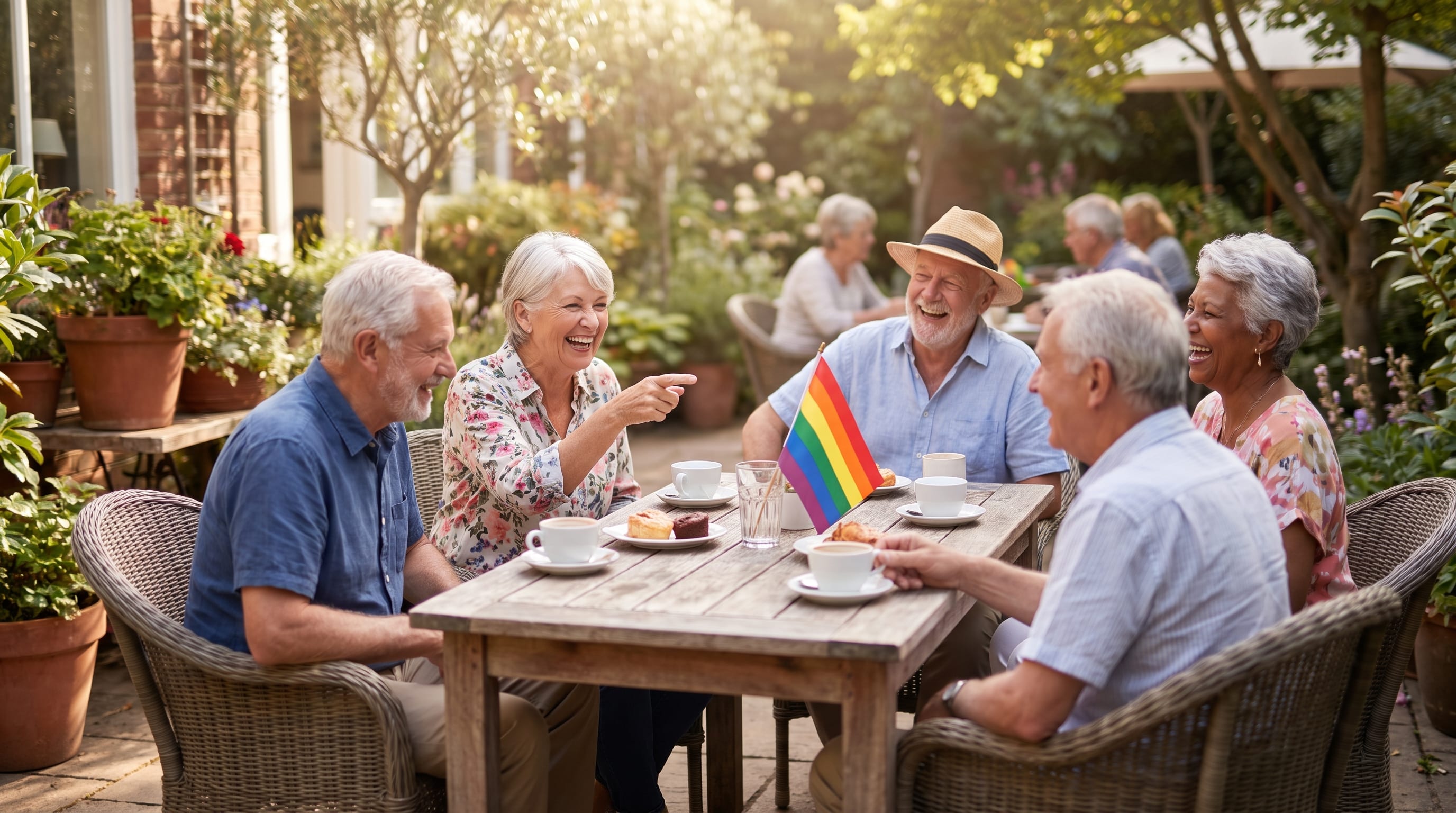
Connection amplifies it further. The U.S. Surgeon General's 2023 advisory underscored how protective social connection is for health. So when you can, move with other people. A walking group, a class, or an exercise date with a friend delivers the benefits of activity and connection at once.
How do I start where I am, whatever my body can do?
Meet your body where it is today, not where it used to be.
- If you are just starting: begin with short daily walks and a few simple strength moves, and add a minute or two each week. Check with your clinician first if you have heart, joint or balance concerns.
- If you have limited mobility or use a wheelchair: seated exercises, chair yoga, resistance bands and water-based activity build real strength and mood. A physical therapist or adaptive-fitness program can tailor a plan.
- If you want it to last: attach it to something you enjoy and, ideally, to other people. Consistency, not intensity, is what changes your health.
Finding affirming, welcoming ways to move
Wellness spaces are not always comfortable for LGBTQIA+ elders, so it is worth finding ones that are. Look for LGBTQ+ senior wellness and fitness programs, affirming community centers, and inclusive offerings like chair yoga, tai chi and walking groups. Our directory lists health-and-wellness organizations that serve LGBTQIA+ older adults, and our guide on finding affirming activities and community can help you build the social side.
You do not have to become an athlete. You just have to keep moving, a little, most days, in ways that fit your body and your life. Few things you can do this year will protect your independence and your joy more.
Sources
- Physical Activity for Older Adults, CDC / Physical Activity Guidelines for Americans, 2nd ed.
- Older Adult Falls: Facts and Data, CDC (Older Adult Fall Prevention)
- Our Epidemic of Loneliness and Isolation (2023 Advisory), U.S. Surgeon General / HHS (2023)
This guide is general information, not medical advice. Talk with a qualified clinician about your situation.
Frequently asked questions
I have not exercised in years. Is it too late to start?
No. The single biggest health gain from activity comes when a very inactive person starts moving at all. Begin gently, a few minutes at a time, and build up. Check with your clinician first if you have heart, joint or balance concerns, then start where you are today.
How much activity do I actually need?
Federal guidelines suggest at least 150 minutes a week of moderate activity, such as brisk walking, muscle-strengthening on 2 or more days, and balance training. That can be broken into short sessions, and any amount is better than none. Work up to it rather than starting there.
I am worried about falling. What helps most?
Strength and balance exercises are the most effective self-care for fall prevention, along with good footwear, a home free of trip hazards, a vision check, and a medication review. The CDC's STEADI program and many senior centers offer proven balance classes.
What if my mobility is limited or I use a wheelchair?
Movement still matters and still counts. Seated exercises, chair yoga, resistance bands and water-based activity build strength and mood without standing. Ask a physical therapist or an adaptive-fitness program to tailor a routine to your body.
How do I find affirming places to move?
Look for LGBTQ+ senior wellness programs, affirming community centers, and inclusive classes such as chair yoga or walking groups. Our directory lists health-and-wellness organizations serving LGBTQIA+ older adults. Moving with welcoming people makes it far easier to keep going.
Keep reading
Well-being and community
Finding LGBTQIA+ Activities, Community and Connection in Later Life
Connection is not a nice-to-have as we age, it is protective for your health. Here is how to find affirming activities, groups and community as an LGBTQIA+ older adult, in person and online.
Health and well-being
Sleep and Aging: Getting Better Rest
Sleep changes as we get older, but poor rest is not something you have to accept. Here is what shifts, what helps, and when to ask for support.
Health and well-being
Managing Diabetes in Later Life
Diabetes is common in later life and very manageable. Here is a plain guide to the basics, daily habits, and coordinating care so you can live well.