
Caregiving and chosen family
When Family Disagrees About a Parent's Care
Disagreements about a parent's care can turn siblings into strangers. Here is how to lower the temperature, use mediation, and keep the person at the center of every decision.
Editorially reviewed· Last reviewed July 28, 2026

Key takeaways
- Conflict over a parent's care is extremely common, and it usually comes from love, fear, and grief showing up in different ways, not from bad people.
- The single most grounding question in any dispute is: what would your parent want? Keeping their wishes central settles more arguments than winning ever will.
- Written documents like an advance directive and a named health care proxy prevent many fights by making the decision-maker clear before a crisis hits.
- For LGBTQIA+ elders, chosen family and partners are sometimes sidelined by biological relatives, which makes legal documents and clear roles especially important.
- A neutral third party, whether a geriatric care manager, mediator, or family meeting facilitator, can break a stalemate without anyone having to lose.
On this page
Few things test a family like an aging parent who needs more help. One sibling thinks it is time for assisted living, another insists on keeping mom at home, a third lives far away and weighs in by phone, and the person everyone claims to be protecting can feel lost in the noise. If this sounds familiar, you are not failing. You are living through one of the most common strains families face.
Conflict at this stage rarely means someone is a villain. More often it means several people who love the same person are frightened in different ways, grieving on different timelines, and carrying old roles from childhood into a very adult crisis. This guide offers ways to lower the temperature, bring in help when you need it, and keep your parent at the center of every choice.
Why does caring for a parent cause so much conflict?
Caregiving lands on families at their most stretched. The National Alliance for Caregiving and AARP found that 53 million Americans were serving as family caregivers in 2020, more than one in five adults, and many were juggling jobs, children, and their own health at the same time. Under that kind of load, small disagreements grow teeth.
The tension usually comes from a few predictable places: unequal work, where one person does most of the caregiving and feels it; money, and the fear of running out; and grief, which can look like anger or denial long before it looks like sadness. Add the old family roles we all slip back into, and you have the ingredients for conflict that has little to do with the actual care decision.
For LGBTQIA+ elders, there can be a further fault line. A partner or chosen family member who has been the real support for years is sometimes second-guessed or sidelined by biological relatives, especially if the relationship was never fully accepted. Naming that dynamic out loud is often the first step to defusing it.
How do we keep our parent at the center?
The most grounding question in any dispute is simple: what would our parent want? Not what would be easiest for us, not what would settle the argument, but what they themselves would choose. When a family keeps returning to that question, a surprising number of fights lose their heat.
That is far easier when your parent has said so in writing. An advance directive and a named health care proxy turn a guessing game into a plan. If your parent can still take part in conversations, include them directly and honor their voice even when you disagree with it. Our guides on advance directives and living wills and talking about care needs can help you open those conversations gently.
What practical steps lower the tension?
Most family conflict eases when everyone is working from the same facts and clear roles. The table below shows common flashpoints and a practical move for each.
| Flashpoint | What it sounds like | A practical move |
|---|---|---|
| Unequal workload | "I do everything and no one helps" | Write out tasks and divide them openly, including the distant sibling |
| Different information | "The doctor never said that" | Hold one call with the care team so all hear the same thing |
| Money worries | "We cannot afford that" | Get real numbers on care costs and benefits together |
| Old roles | "You always think you know best" | Name the pattern and agree to focus on the parent, not the past |
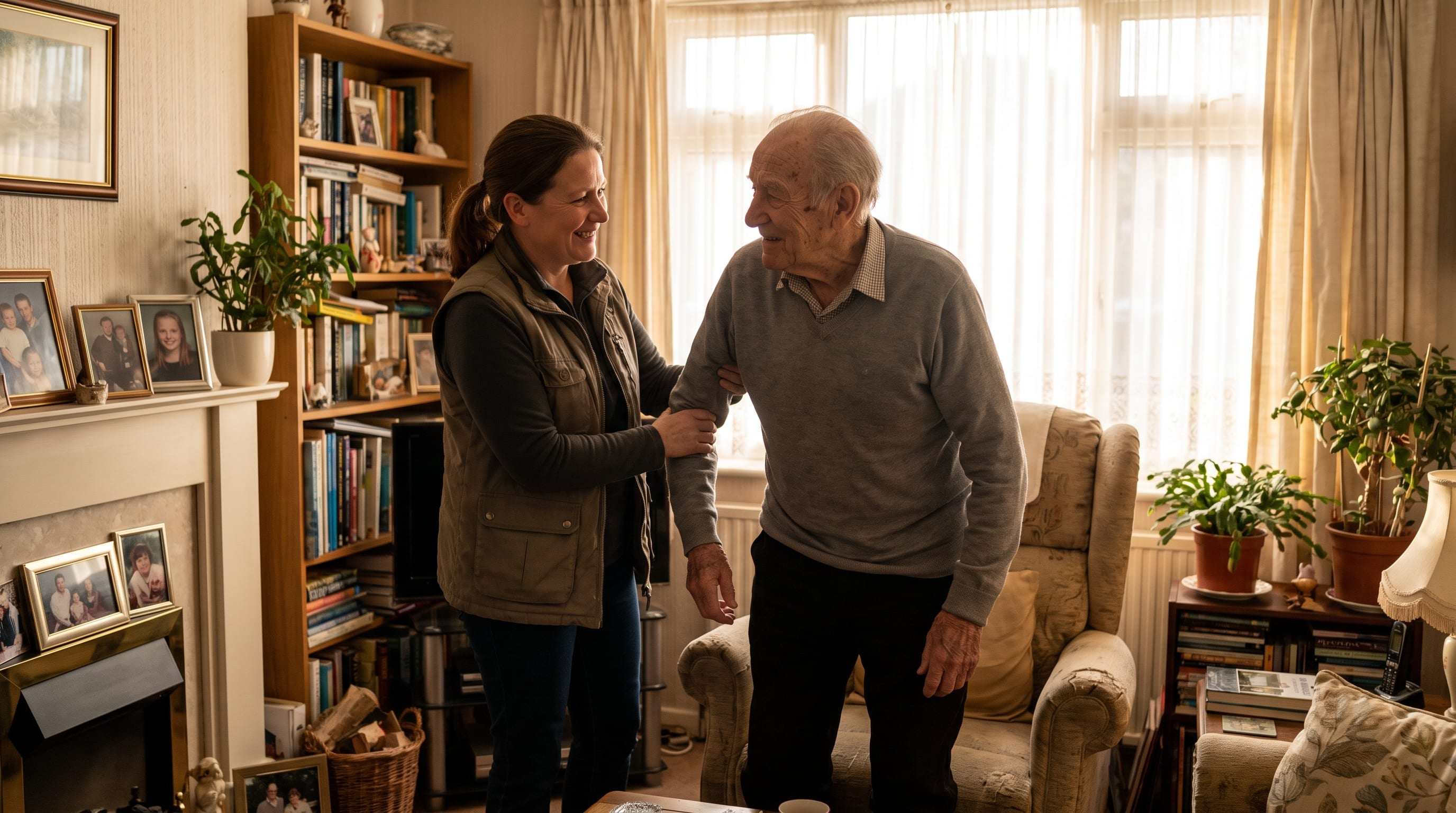
A structured family meeting, where each person gets uninterrupted time to speak and the group ends with written decisions, can accomplish in one afternoon what months of tense texts cannot.
What about the sibling who lives far away?
Distance breeds its own kind of conflict. The relative who lives closest often carries the daily load and can come to resent advice from someone who visits twice a year, while the far-away sibling may feel shut out, mistrust what they are told, or arrive for a short visit convinced things are worse or better than they really are. Both feelings are real, and both can poison a decision if they go unnamed.
A few habits help. Give the distant person a genuine job that distance does not prevent, such as managing bills, researching care options, scheduling telehealth visits, or handling insurance calls, so they contribute rather than critique. Share the same updates with everyone at the same time, ideally in writing, so no one feels they are getting a filtered version. And when the far-away sibling does visit, resist the urge to argue about a single snapshot. Instead, invite them to a call with the care team so they hear the fuller picture directly. Our guide on long-distance caregiving has more on making it work.
When should we bring in outside help?
Sometimes love and good intentions are not enough to break a stalemate, and that is when a neutral outsider earns their keep. A geriatric care manager can assess your parent's needs objectively and give the family a shared, professional recommendation to rally around. Our guide on geriatric care managers explained describes what they do.
For deeper rifts, a professional mediator or elder-focused family facilitator keeps everyone heard while steering the group back to the person at the center. This usually costs far less than a legal fight and, just as important, preserves the relationships you will still need long after the immediate decision is made.
What if the disagreement is about legal authority?
When conflict turns to who gets to decide, the answer comes down to documents. Whoever your parent named as health care proxy or durable power of attorney holds the legal authority in those areas, regardless of who shouts loudest. If no one was ever named and your parent can no longer decide, families can end up in a guardianship process in court, which is slow, costly, and rarely leaves anyone happy.
This is exactly why chosen family members should keep copies of any documents naming them and bring them to appointments and facilities. If you are being blocked despite holding that authority, an LGBTQIA+ friendly elder law attorney can help. See our guides on finding an LGBTQIA+ elder law attorney and avoiding unwanted guardianship, and browse affirming professionals in our directory. This guide is general information, not legal advice, so confirm specifics with a qualified attorney.
Disagreement does not mean your family is broken. It means people who care are struggling to find their footing on hard ground. If you can keep coming back to what your parent would want, share the facts openly, and reach for help before positions harden, you give your family its best chance to make it through the crisis and still be a family on the other side.
Sources
- Caregiving in the U.S. 2020, National Alliance for Caregiving and AARP (2020)
- Family Caregiving and Conflict, Family Caregiver Alliance (2024)
This guide is general information, not legal advice. Laws vary by state and change. Confirm specifics with a licensed elder-law attorney.
Frequently asked questions
My siblings and I cannot agree. Where do we even start?
Start by naming a shared goal you all actually agree on, usually your parent's safety and comfort, then work backward from there. Get everyone the same facts from the doctors and care team so you are not arguing from different information. If you still stall, a neutral facilitator or geriatric care manager can help.
Who has the legal right to make decisions if we disagree?
Whoever your parent named as health care proxy or power of attorney holds the legal authority for those areas. If no one was named and your parent can no longer decide, families sometimes end up in court over guardianship, which is slow and painful. This is why naming a decision-maker early matters so much.
As the chosen family member, I keep getting shut out. What can I do?
Legal documents are your strongest protection. If your loved one named you as proxy or power of attorney, that authority stands regardless of what relatives think. Bring copies to appointments and facilities, and consider an LGBTQIA+ friendly elder law attorney if you are being blocked.
Is it worth bringing in a professional mediator?
Often yes, especially when the same argument keeps repeating. A trained mediator or family meeting facilitator is neutral, keeps everyone heard, and focuses the group on the parent rather than old grievances. It usually costs far less than a legal battle and preserves relationships.
Keep reading
Caregiving and chosen family
Caregiver Burnout: Protecting Yourself While Caring for an LGBTQIA+ Elder
Caring for someone you love is meaningful and exhausting. Here is how to spot burnout early, build a real team, get genuine breaks, and protect your own health so you can keep showing up.

Caregiving and chosen family
How to Talk With an Aging Parent or Partner About Care
The conversation about care is hard to start and easy to put off. Here is how to raise it with warmth, at the right time, in a way that keeps your loved one in control of their own life.
Caregiving and chosen family
Long-Distance Caregiving
You can be a real caregiver from hundreds of miles away. Here is how to build a local team, coordinate care, and make your visits count without burning out.