
Caregiving and chosen family
When One Partner Needs More Care Than the Other
When two partners need very different levels of care, staying together takes planning. Here are the options that let couples remain close as their needs diverge.
Editorially reviewed· Last reviewed July 24, 2026
Key takeaways
- When partners have different care needs, staying together is usually possible but takes deliberate planning.
- Continuing-care communities let couples live on one campus while each receives a different level of care.
- Home care can let a couple stay in their own home, with paid help scaled to the higher-need partner.
- Federal nursing-home rules let spouses share a room when both live in the facility and both consent.
- Ask every community directly how it keeps couples together when care needs diverge, and get the answer in writing.
On this page
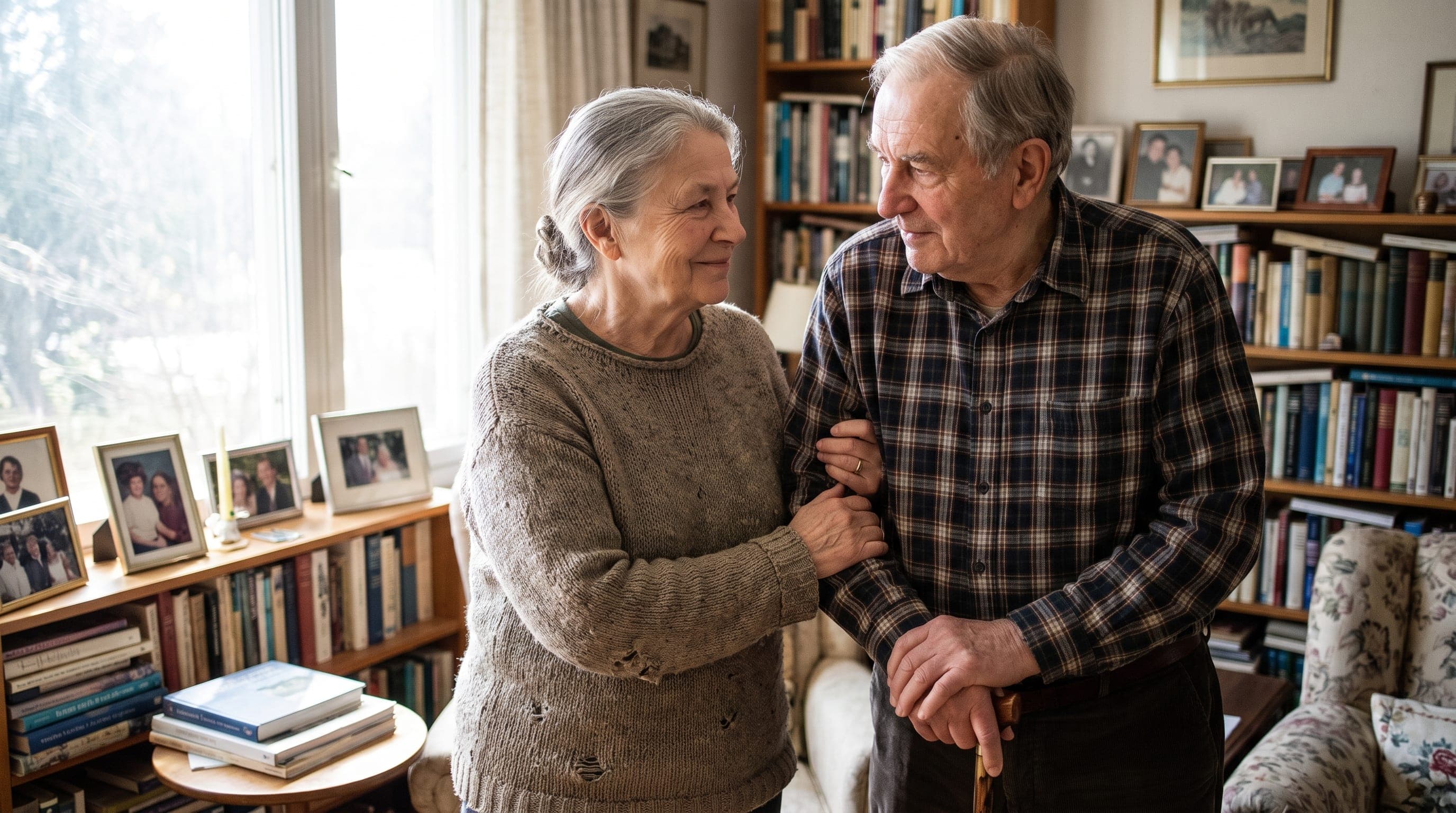
Few worries weigh on an older couple more than the fear of being separated when one of them needs more help than the other. After a lifetime together, the idea of living apart in your final years is painful. The reassuring news is that staying together is usually possible, and for same-sex and LGBTQIA+ couples the same options and protections apply. It just takes planning and the right questions. This guide walks through how couples with diverging care needs can remain close.
Why differing care needs are so common
It is the norm, not the exception, for two partners to age at different rates. One may stay active and independent while the other develops a condition that requires daily help, or one may face memory loss while the other remains sharp. Left unplanned, this mismatch is exactly what pushes couples into living apart, one staying home while the other moves to a facility, or the two ending up in different places entirely. Planning ahead is what keeps that from happening.
Option one: a continuing-care community
For many couples, a continuing-care retirement community, sometimes called a life-plan community, is the cleanest solution. These communities offer several levels of care on a single campus, from independent living through assisted living, memory care and skilled nursing. A couple can live there together, and as one partner's needs grow, that partner can move up in care without moving away. They may shift from a shared apartment to being in different sections of the same campus, but they remain close, able to see each other daily. Our guide to understanding the levels of senior care explains how these levels fit together.
Option two: staying home with care
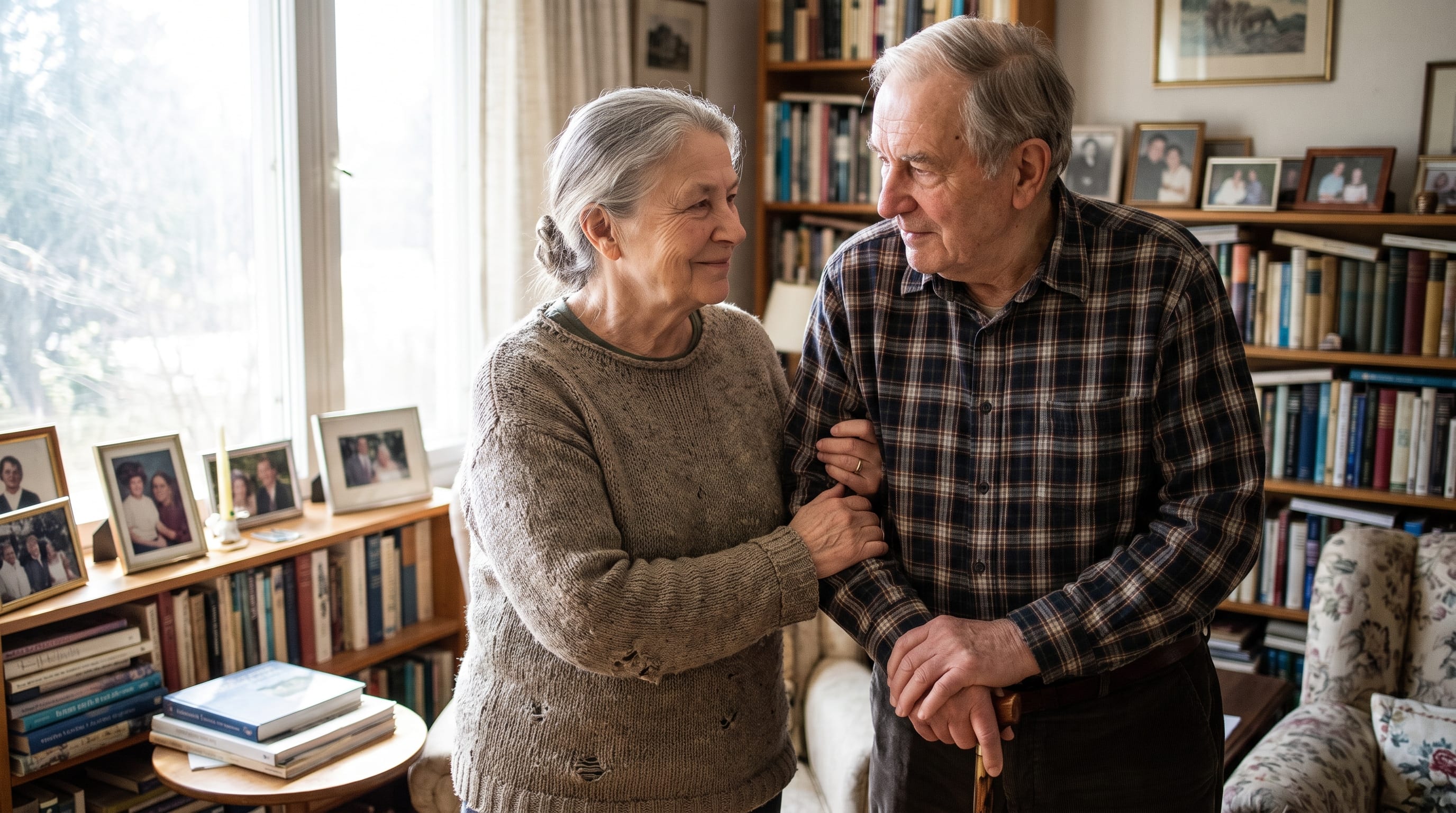
Many couples prefer to stay in their own home for as long as possible, and home care can make that work even when needs diverge sharply. Paid caregivers can be brought in and scaled to the higher-need partner, which also relieves the well partner from carrying all the caregiving alone, a common path to burnout. Home modifications and services can extend this arrangement well into significant care needs. The key is to bring in help early rather than waiting until the well partner is exhausted, a point our guide on building a chosen-family care team reinforces.
What rights protect couples in facilities?
If care does move into a facility, know your protections. For nursing homes that accept Medicare or Medicaid, federal rules at 42 CFR 483.10 give residents the right to share a room with a spouse when both live in the facility and both consent. That is a meaningful protection for married couples in skilled nursing.
Assisted living is different, because it is licensed by each state rather than federally, so policies on couples and differing care needs vary by state and by community. This makes asking direct questions essential, and our guide on whether same-sex couples can share a room covers how to secure it in writing.
How does cost work for a couple?
Expect to pay for two residents, plus added care fees for the partner who needs more support. Exact pricing varies widely by community, apartment type and care level, so the number that matters is the all-in monthly cost for both partners at the care levels you each expect. Ask how a second resident is priced, how care fees are assessed for each person, and what happens to the cost if one partner's needs increase. Our guide on how to pay for senior care covers the funding options.
The questions that keep couples together
Whatever setting you consider, put the couple question at the center of your tour. Ask directly:
- How do you keep couples together when one partner needs more care than the other?
- Can both partners stay on the same campus, or in the same apartment, as needs change?
- How is care priced for each partner?
- What happens if one partner's needs increase suddenly or require memory care or skilled nursing?
- Will your nondiscrimination policy and couples arrangement be part of our signed contract?
Get the answers in writing. Our tour question checklist helps you carry these from one community to the next.
What if you did not plan ahead?
Sometimes care needs change suddenly and there was no time to prepare. If you find yourselves facing separation now, you still have moves to make. Ask the current or prospective community directly about keeping you together, since many will accommodate a couple even mid-crisis if asked. Bring in a geriatric care manager to find options quickly, and lean on a long-term care ombudsman if a facility is not honoring a couple's rights. Continuing-care communities and home care can often be arranged faster than families expect. The absence of a long-range plan is a harder starting point, not a dead end, so do not assume separation is inevitable before you have asked.
Planning together, ahead of time
The couples who stay together are usually the ones who planned before a crisis forced a rushed decision. Talk through your wishes, put your legal documents in place so each of you can advocate for the other, and choose a community or care arrangement with staying together built in. When you are ready to compare affirming options that will honor your relationship, the Chosen Years directory lets you weigh communities on care, cost and documented inclusion together.
Sources
- Continuing care retirement communities (CCRCs), Harvard Health
- Nursing home resident rights (42 CFR 483.10), eCFR / CMS
This guide is general information, not medical advice. Talk with a qualified clinician about your situation.
Frequently asked questions
Can a couple stay together if one needs much more care?
Usually yes, but it takes planning. Options include continuing-care communities that offer several care levels on one campus, home care scaled to the higher-need partner, and communities that accommodate couples with different needs. Ask directly and get it in writing.
What is a continuing-care community, and how does it help couples?
A continuing-care retirement community offers independent living, assisted living, memory care and skilled nursing on one campus. A couple can live there together and each receive the level of care they need, staying close even as their needs diverge.
Do nursing homes let married couples share a room?
Federal rules for Medicare and Medicaid certified nursing homes give residents the right to share a room with a spouse when both live in the facility and both consent. This is a nursing-home protection and does not automatically apply to assisted living.
How does cost work when partners need different levels of care?
Couples generally pay for two residents plus added care fees for the higher-need partner. Exact pricing varies widely by community and care level, so ask for the full all-in cost for both partners.
What should we ask a community about staying together?
Ask how couples are kept together when one needs more care, whether both partners can remain on the same campus or in the same apartment, how care is priced for each, and what happens if one partner's needs increase suddenly.
Keep reading
Caregiving and chosen family
Caregiver Burnout: Protecting Yourself While Caring for an LGBTQIA+ Elder
Caring for someone you love is meaningful and exhausting. Here is how to spot burnout early, build a real team, get genuine breaks, and protect your own health so you can keep showing up.

Caregiving and chosen family
How to Talk With an Aging Parent or Partner About Care
The conversation about care is hard to start and easy to put off. Here is how to raise it with warmth, at the right time, in a way that keeps your loved one in control of their own life.
Caregiving and chosen family
Long-Distance Caregiving
You can be a real caregiver from hundreds of miles away. Here is how to build a local team, coordinate care, and make your visits count without burning out.