
Identity and inclusion
Bisexual Elders and Being Seen in Aging
Bisexual elders are often overlooked, even within LGBTQIA+ spaces. Here is what that invisibility costs, and how to find care and community that see you fully.
Editorially reviewed· Last reviewed July 28, 2026
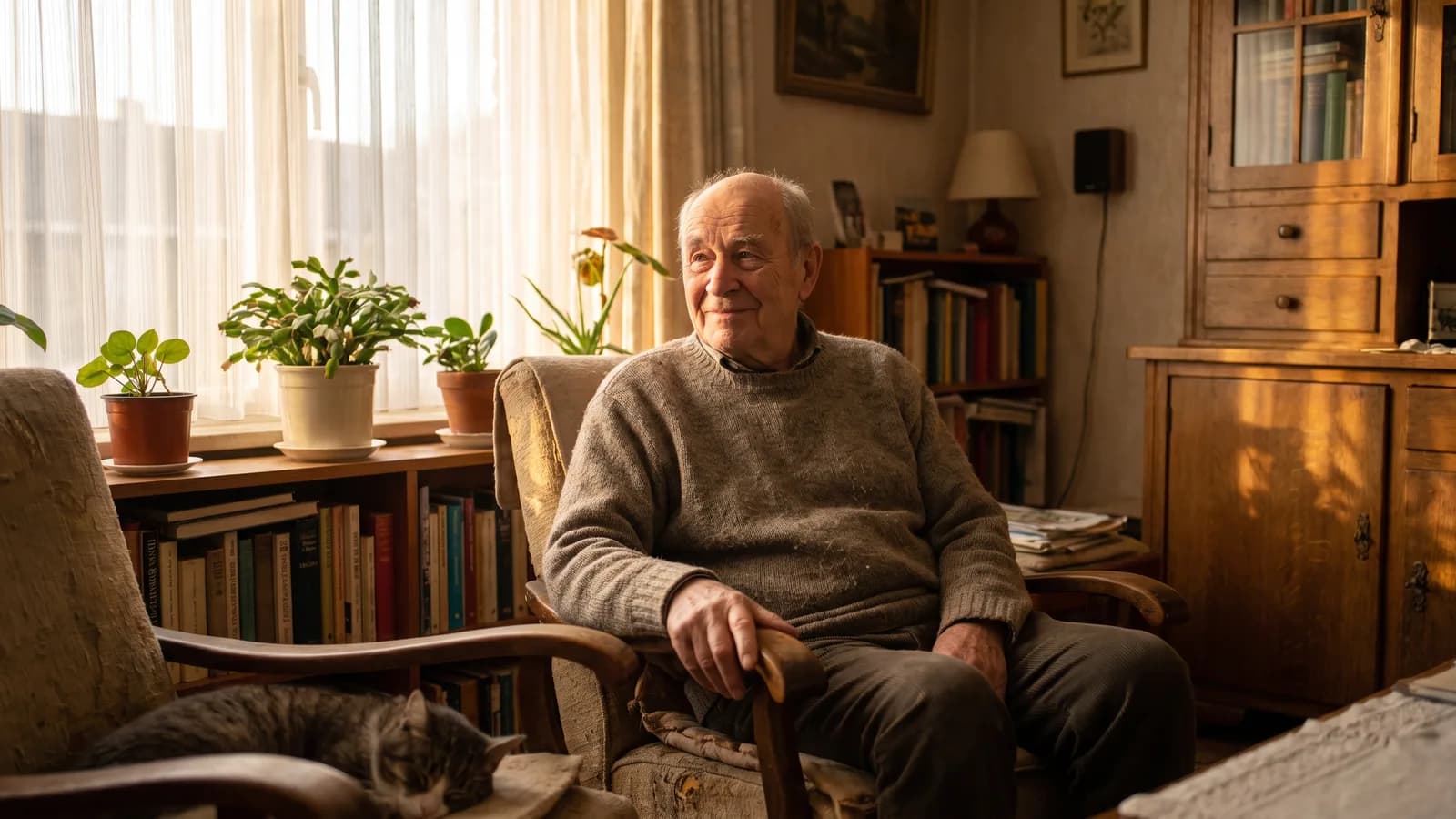
Key takeaways
- Bisexual elders are a large but often invisible group, in part because many are less likely to be out than their lesbian and gay peers.
- Research finds bisexual older adults tend to report poorer health and more loneliness, and much of that gap traces back to isolation and thin support, not identity itself.
- Your identity is valid whether you are partnered with a man, a woman, someone nonbinary, or single. You do not owe anyone proof or a history.
- Affirming care means providers who do not erase or question your bisexuality, and who keep your information private and respected.
- Community and chosen family are powerful protection against isolation, and both are worth seeking out on purpose.
On this page
Bisexual people have always been here, growing older alongside everyone else. Yet bisexual elders are often the least seen members of the LGBTQIA+ community, sometimes even within it. Assumed to be straight when partnered with one gender and gay when partnered with another, many bisexual older adults spend a lifetime having their identity guessed at, questioned, or quietly erased.
This guide is for bisexual elders and for the chosen families and friends who care about them. It looks honestly at what invisibility costs, what the research says about health and connection, and how to find care and community that see you as your whole self. It is general information, not medical advice, so bring your specific questions to a provider you trust.
Why are bisexual elders so often overlooked?
Bisexuality tends to get read through whoever a person is standing next to. A bisexual woman married to a man is presumed straight. A bisexual man with a male partner is presumed gay. Single bisexual elders may be assumed to be one thing or another entirely. In each case, the actual identity disappears, and the person learns that the world would rather round them off than see them clearly.
That erasure has real effects. Research summarized by the Williams Institute notes that bisexual adults are less likely to be fully out than their lesbian and gay peers, which leaves them underserved and understudied. Services designed for LGBTQIA+ elders are still often shaped around gay and lesbian experiences, and bisexual people can slip through the cracks. Naming this pattern is the first step to pushing back against it, because you cannot ask for care that sees you until you know what has been missing.
What does invisibility cost bisexual older adults?
The cost is not abstract. Some studies find that bisexual older adults report poorer overall health and higher loneliness than lesbian and gay older adults of the same age. Importantly, researchers point to indirect causes: thinner social networks, less disclosure, fewer affirming resources, and the ordinary financial strain that isolation can bring. In other words, the gap is largely about circumstances, not about bisexuality itself, which means it can be changed.
Loneliness is a thread worth pulling. Broader surveys of LGBTQIA+ elders show how common isolation already is. In AARP's 2024 Dignity survey of LGBTQIA+ adults 45 and older, about half said they already feel socially isolated at times, and more than three quarters worried about having adequate social support as they age. Bisexual elders, more likely to be partly closeted and less likely to be woven into gay or lesbian community spaces, can feel that pull even more sharply. Our guide on LGBTQIA+ senior social isolation goes deeper on why this matters and what helps.

How do I find care that does not erase my identity?
Affirming care for bisexual elders looks a lot like affirming care for anyone, with one added test: providers should take your identity at face value without questioning, correcting, or ignoring it. That means not assuming your sexual history from your current partner, not treating bisexuality as a phase or a confusion, and not deciding it is irrelevant to your comfort and dignity.
When you are evaluating a provider or community, a few honest questions reveal a lot. The table below contrasts what erasure sounds like with what being genuinely seen sounds like.
| Situation | Sounds like erasure | Sounds affirming |
|---|---|---|
| Intake forms | Only "single, married, widowed" with a husband or wife assumed | Space for your relationship and identity in your own words |
| Talking about your past | "So were you ever really gay?" | "Tell me what I should know to care for you well." |
| Your current partner | Assumes your orientation from their gender | Asks how you describe yourself and respects the answer |
| Privacy | Shares your history without asking | Keeps your information confidential and on your terms |
If a place fails these small tests during a tour, that tells you something about the daily experience inside. Our guide on what LGBTQIA+ affirming senior care means breaks down the difference between a friendly brochure and real competence, and you can browse providers that have made commitments to affirming care in our directory.
What should I keep in mind about my health?
Invisibility can follow you into the exam room in a way that affects your care, so it is worth being ready for. A provider who assumes your history from your current partner may skip questions, screenings, or conversations that are actually relevant to you, or may raise ones that are not. You know your own body and history best, and it is entirely reasonable to share what matters for your care and to ask for the screenings and preventive care that fit your real life rather than an assumption.
Two threads deserve attention. Sexual health does not end at a certain age, and honest, judgment-free conversations with a provider help you stay well, including any testing that makes sense for you. And mental health is worth watching, since the chronic strain of being unseen, sometimes called minority stress, can weigh on mood over the years. If low mood or anxiety lingers, our guide on depression and mental health in older adults covers what helps. A provider you can be fully honest with is not a luxury here; it is what makes good care possible. Bring your specific questions to a clinician you trust.
Do I have to come out, and how much should I share?
You never owe anyone your identity or your history. Coming out in later life, or in a care setting, is a deeply personal decision, and there is no single correct choice. Some bisexual elders find that being open lets them finally relax and feel at home. Others value their privacy and share only with the people and providers who need to know. Both paths are valid.
What matters is that the choice stays yours, and that respect does not depend on it. A good provider treats you well whether or not you disclose, and keeps whatever you share private. If you are weighing this, our guide on coming out in a care setting walks through the practical and emotional sides without pushing you in either direction.
How do I build community that sees me fully?
Because bisexual elders can feel adrift between straight and gay worlds, community often has to be built on purpose rather than found by accident. The good news is that it can be built. Bisexual-specific groups, broader LGBTQIA+ senior programs, affirming faith communities, hobby circles, and online spaces all offer places where you do not have to explain or defend who you are.
Chosen family matters here too. For many bisexual elders, the people who truly see them are friends, former partners, and community members rather than relatives, and those bonds deserve to be recognized and leaned on. Building a reliable circle of support is worth doing early, before a health event makes it urgent.
Being bisexual and growing older is not a contradiction, and it is not a footnote to someone else's story. You have carried a full, complex, real identity across a lifetime, often without much company in it. The years ahead can hold something different: care that takes you at your word, community that already understands, and people who see you clearly and stay. You deserve to be seen, and it is never too late to insist on it.
Sources
- LGBT Aging: A Review of Research Findings, Needs, and Policy Implications, Williams Institute, UCLA School of Law (2016)
- LGBTQ+ Older Adults and Social Isolation (Dignity 2024 Survey), AARP (2024)
- SAGE State of LGBTQ+ Aging Survey, Administration for Community Living, U.S. Department of Health and Human Services (2024)
This guide is general information, not medical advice. Talk with a qualified clinician about your situation.
Frequently asked questions
Am I still bisexual if I have only been with one gender for years?
Yes. Bisexuality describes your capacity for attraction, not a scorecard of past relationships. Being married to one person, or single, or with the same partner for decades does not change who you are. You do not have to prove your identity to anyone, including a care provider.
Why are bisexual elders called invisible?
Bisexual people are often assumed to be straight or gay depending on who they are with, so their identity gets erased in everyday life and in research. Many are also less likely to be fully out. That invisibility can mean fewer services designed with them in mind and more isolation.
Do I have to come out to a senior living community?
That is always your choice, and there is no single right answer. Some people find that being open helps them feel at home, while others prefer privacy. What matters is that a community treats you with respect either way. Our guide on coming out in a care setting can help you think it through.
Does being bisexual affect my health as I age?
Some research finds bisexual older adults report poorer health and more loneliness than lesbian and gay peers, but much of that gap is tied to isolation, stigma and thin support, not to identity itself. Strong connections and affirming care can close a lot of that distance. Talk with your own provider about your specific health.
Keep reading
Identity and inclusion
Aging as an LGBTQIA+ Person of Color
Aging at the intersection of race and LGBTQIA+ identity brings layered challenges and deep strengths. Here is how to find care and community that honor all of who you are.
Identity and inclusion
Aging as an LGBTQIA+ Person in a Rural Area
Aging in a small town can mean fewer affirming doctors, longer drives, and a thinner social circle. Here is how to build connection, care, and safety where you are.
Identity and inclusion
Coming Out, or Back In, in a Care Setting
Many LGBTQIA+ elders feel pressure to hide who they are when they move into care. Here is how to weigh safety, choose affirming settings, disclose on your own terms, and know your rights.