
Health and well-being
Nutrition and Eating Well as You Age
As you age, your body needs fewer calories but more nutrients, and appetite and thirst can fade. Here is how to eat well, stay hydrated, and find help when cooking or shopping gets hard.
Editorially reviewed· Last reviewed July 28, 2026
Key takeaways
- As you age, you generally need fewer calories but the same or more of many nutrients, so nutrient-dense foods matter more than ever.
- Appetite and thirst often fade with age. Do not wait to feel hungry or thirsty; eating and drinking on a schedule protects you.
- Protein, fiber, calcium, vitamin B12, and vitamin D deserve special attention in later life; ask your doctor whether you need any supplements.
- Dehydration is a common, under-recognized risk. Sip fluids throughout the day rather than relying on thirst.
- If shopping or cooking is getting hard, meal programs, home delivery, and community dining can keep you well-fed and connected.
On this page
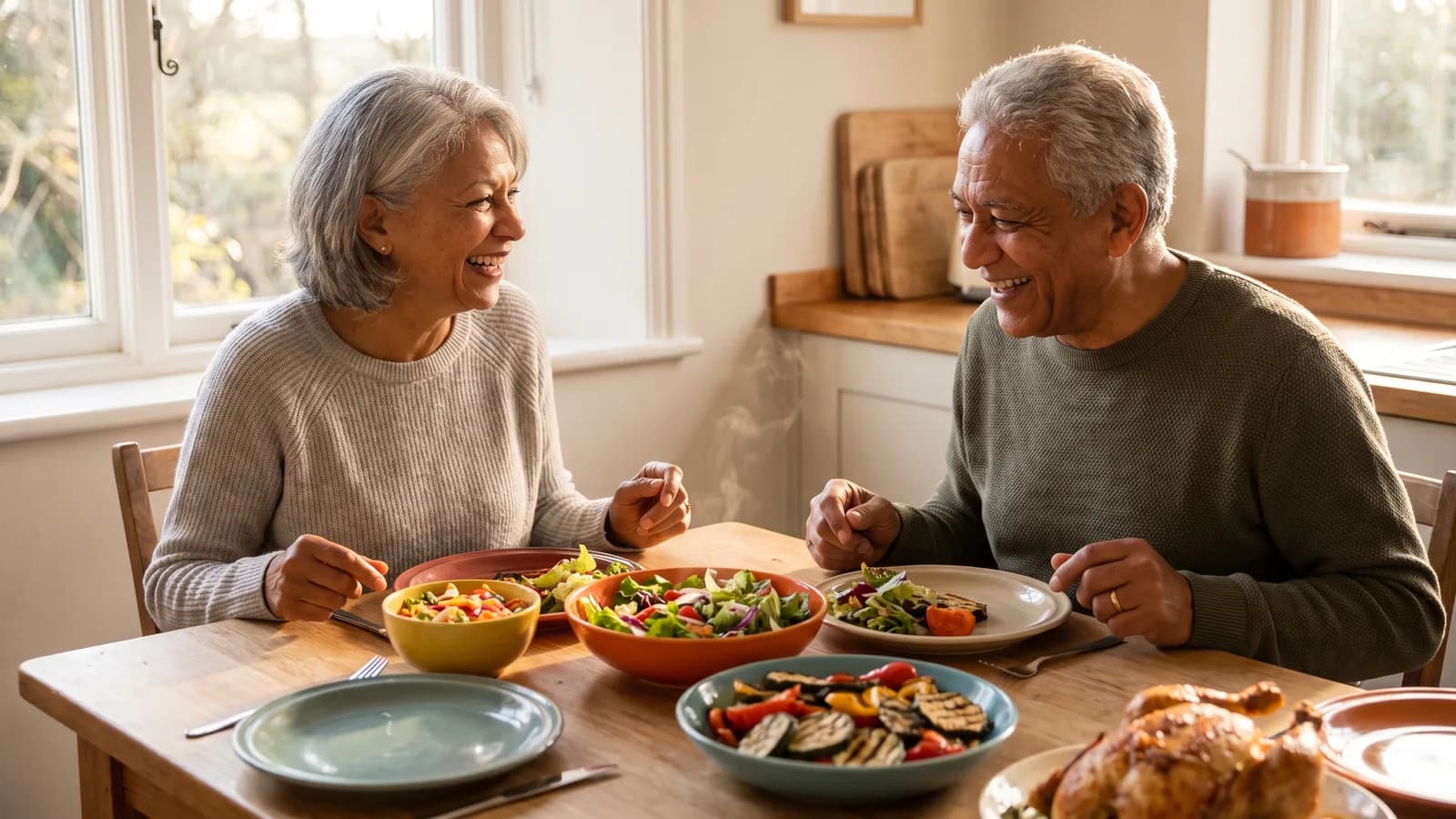
Food is never only fuel. It is pleasure, memory, and connection: the dish a partner always made, the table where chosen family gathers, the small daily ritual of a good meal. As we age, though, the body's needs shift, appetite and thirst can quietly fade, and the simple acts of shopping and cooking sometimes get harder. Eating well takes a little more intention than it once did.
The good news is that the principles are simple, and small changes add up. You do not need a strict diet or expensive products. You need nutrient-dense food, steady hydration, and a bit of help when you want it. This guide covers how your needs change, how to handle a smaller appetite, why hydration matters so much, and where to turn when preparing meals becomes a struggle.
How do my nutritional needs change as I age?
The core shift is this: most older adults need fewer calories but the same amount, or more, of many nutrients. Metabolism slows and activity often drops, so the body burns less energy. Yet the need for protein, calcium, fiber, and several vitamins holds steady or climbs. The National Institute on Aging puts it plainly, encouraging older adults to choose nutrient-dense foods across all the food groups rather than filling up on calories that offer little nourishment.
In practice, that means making each bite count. A few nutrients deserve special attention in later life.
| Nutrient | Why it matters more with age | Good sources |
|---|---|---|
| Protein | Preserves muscle and strength | Fish, poultry, eggs, beans, dairy, tofu |
| Fiber | Supports digestion and heart health | Whole grains, beans, fruits, vegetables |
| Calcium & vitamin D | Protect bones | Dairy, fortified foods, leafy greens, sunlight |
| Vitamin B12 | Harder to absorb with age | Fish, meat, dairy, fortified cereals |
| Potassium | Helps blood pressure | Bananas, potatoes, beans, leafy greens |
Because absorption of some nutrients like B12 declines with age, and because some medications affect nutrition, ask your doctor whether you need any supplements rather than guessing. This overlaps directly with your medication list, covered in our guide on managing medications.
What can I do when my appetite fades?
A shrinking appetite is one of the most common and under-discussed parts of aging. Taste and smell can dull, medications may cause nausea or dry mouth, dental problems make chewing hard, and low mood can steal interest in food altogether. Losing that hunger cue is real, and it can quietly lead to losing weight and nutrients you need.
A few strategies help. Eat smaller amounts more often rather than facing three large plates. Make food appealing with color, herbs, and a bit of variety, since the eyes and nose feed the appetite too. Keep easy, nourishing snacks within reach, such as yogurt, nuts, cheese, or fruit. And where you can, eat with others, because company is one of the most reliable appetite boosters there is.
If your appetite loss comes with sadness or withdrawal, the two may be connected, and our guide on depression and mental health is worth reading. Dental pain is another fixable culprit; see dental and oral health for seniors. And if weight is dropping without you trying, tell your doctor, since unexplained weight loss can signal an underlying problem.
Why is hydration such a big deal?
Dehydration is one of the most common and most overlooked risks in later life, and it can cause confusion, dizziness, falls, and hospital stays. The reason it sneaks up on people is simple: the sense of thirst fades with age. The National Institute on Aging notes that older adults may not feel thirsty even when their bodies need fluids, and advises not to wait until you feel thirsty to drink.
The fix is to make fluids a habit rather than a response. Sip throughout the day, keep a glass or bottle where you will see it, and drink a little with every meal and medication. Water is ideal, but milk, broth, herbal tea, and water-rich foods like soup, melon, and cucumber all count. Because the right amount depends on your health, ask your doctor for a target, especially if you take diuretics or have heart or kidney conditions. If sugary drinks are your main source of fluids, easing back on those is a healthy swap.
What if shopping or cooking is getting hard?
There comes a point for many people when the barrier is not knowing what to eat, but managing to get and make it. Vision changes, arthritis, low energy, or simply cooking for one can turn meals into a chore. This is exactly what community programs are built for, and using them is a sign of good planning, not decline.
- Home-delivered meal programs, such as Meals on Wheels, bring nutritious meals and a friendly check-in to your door.
- Congregate dining at senior centers combines a hot meal with company, addressing nutrition and isolation at once.
- Grocery and meal-kit delivery services reduce trips and heavy lifting.
- In-home aides can help with shopping, meal prep, and eating.
- Your local Area Agency on Aging can connect you to most of these, often free or low-cost.
For LGBTQIA+ elders, eating well is tied to community. Sharing meals with chosen family and finding affirming senior dining or social programs nourishes body and spirit together. Our directory can help you find affirming meal and community programs near you.
What if food costs are a strain?
Eating well should not depend on a big grocery budget, and several programs exist to help older adults on limited incomes. The largest is SNAP, the federal food-assistance program, which many eligible older adults never sign up for because they assume they earn too much or that the benefit would be tiny. Neither is a safe assumption, and older applicants can often deduct medical and housing costs that raise the benefit. It is worth applying even if you are unsure you qualify.
Other help is more local. Many areas run a Senior Farmers Market Nutrition Program that provides coupons for fresh produce, and food pantries and faith communities often welcome older neighbors with no questions asked. Your Area Agency on Aging can point you to what is available and help you enroll. Stretching a budget also comes down to a few habits: buying frozen and canned vegetables, which keep their nutrients and reduce waste, choosing beans and eggs as low-cost protein, and cooking a little extra to freeze for the days when energy is short.
Eating well later in life is not about willpower or strict rules. It is about making each meal count, drinking before you are thirsty, and accepting help so a good plate is never more trouble than it is worth. Start with one change, a protein at breakfast, a water bottle on the counter, a standing dinner with a friend, and build from there. Your body, and your spirits, will feel the difference.
Sources
- Healthy Meal Planning: Tips for Older Adults, National Institute on Aging
- Getting Enough Fluids, National Institute on Aging
This guide is general information, not medical advice. Talk with a qualified clinician about your situation.
Frequently asked questions
Why do I need fewer calories but more nutrients as I age?
With age, metabolism slows and activity often decreases, so the body needs fewer calories. But the need for many nutrients, such as protein, calcium, and certain vitamins, stays the same or rises. That means every bite should count, favoring nutrient-dense foods over empty calories.
I just do not feel hungry anymore. What can I do?
A fading appetite is common and has many causes, including medications, dental problems, low mood, and reduced taste or smell. Try smaller, more frequent meals, make food appealing and social, and keep easy nutritious snacks on hand. If weight is dropping, tell your doctor, since it can signal an underlying issue.
How much water should older adults drink?
Needs vary by person and health condition, so ask your doctor for a specific target. In general, sip fluids throughout the day rather than waiting for thirst, since the sense of thirst fades with age. Water, milk, broth, and juicy fruits all count.
What if I can no longer shop or cook for myself?
Help exists. Home-delivered meal programs like Meals on Wheels, community or senior center dining, grocery delivery, and in-home aides can all keep you well-fed. Your local Area Agency on Aging can connect you, and our directory lists affirming programs.
Keep reading

Health and well-being
HIV and Aging: A Guide for Long-Term Survivors and Their Care
More people than ever are growing old with HIV. Here is what long-term survivors and their chosen families should know about affirming providers, other health conditions, stigma, privacy, and planning for care with dignity.
Health and well-being
Parkinson's Disease and Aging: Care and Planning
Parkinson's changes over time, but it moves slowly and can be managed for years. Here is what LGBTQIA+ elders and their chosen families should know about symptoms, care needs, and planning ahead.
Health and well-being
Managing Medications and Avoiding Dangerous Mixes
The more medications you take, the higher the chance of a harmful mix. Here is how to keep an accurate list, get a real medication review, organize your doses, and ask the right questions.